

There’s a world beneath our feet that we hardly ever think about. We walk on grass, pavement, and soil, going about our daily lives, while right below us lies a mystery that has sparked stories for generations. It’s not just dirt and rocks down there. Many people believe that deep under the surface of the Earth, there are secret bases, hidden cities, and even entire civilizations that remain undiscovered. These aren’t just old legends. They are modern rumors that have captured the imagination of millions.
Think about it. We have explored the highest mountains and the deepest parts of the ocean, but we have barely scratched the surface of our own planet. The deepest hole ever drilled, the Kola Superdeep Borehole in Russia, only went about 7.5 miles down. That’s just a tiny pinprick on an apple. The Earth’s crust is much thicker, and below that lies the mantle, a layer of rock that is thousands of miles deep. What could be hidden in the vast, unexplored darkness beneath us? The rumors say there is more than just molten rock.
From tales of government bunkers to stories of advanced beings living inside the Earth, the idea of a hidden underground world is fascinating. It makes us question what we really know about our planet. So, what is the truth behind these incredible stories? Are they just science fiction, or could there be a kernel of fact buried deep within the legend?
What are these rumors about hidden underground bases?
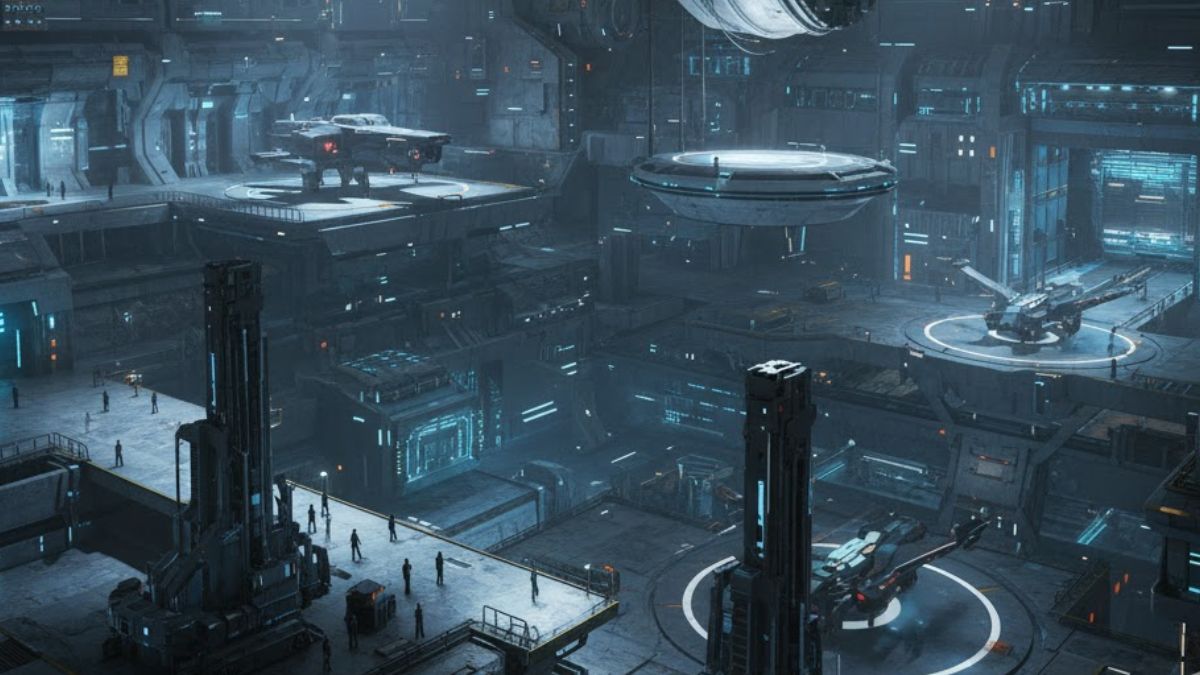
The core of these rumors suggests that there are massive, man-made facilities built deep underground. These are not simple basements or subway tunnels. We are talking about huge complexes, some said to be the size of small cities, built miles beneath the surface. People who believe in these bases often say they are built by governments or powerful, secret organizations. The supposed purposes for these bases are just as varied as the stories themselves.
Some say they are military bunkers designed to protect world leaders in case of a global disaster, like a nuclear war or an asteroid impact. Others go a step further, suggesting that these bases are used for top-secret research, including experiments on advanced technology or even alien life forms. Then there are the more extraordinary claims. These involve the idea that the bases are not entirely human. Some rumors speak of joint operations between humans and other intelligent beings who have lived inside the Earth for a very long time. The common thread in all these stories is secrecy. These bases are said to be so well hidden that the general public has no idea they exist, and any evidence is quickly covered up.
Who started the idea of a hollow Earth?
The concept of a hollow Earth is not new. It is an ancient idea that has appeared in many cultures and myths throughout history. In the 17th century, a famous astronomer named Edmond Halley, who discovered Halley’s Comet, also proposed a theory about a hollow Earth. He suggested that our planet was a series of hollow shells, one inside the other, each with its own atmosphere and possibly even life. He thought this could explain strange compass readings.
In the 19th century, an American army officer named John Cleves Symmes Jr. became a passionate advocate for the hollow Earth theory. He proposed that there were giant holes at the North and South Poles that led to the inside of the planet. He even tried to get the U.S. government to fund an expedition to find these openings. While his scientific theories were dismissed, they captured the public’s imagination and inspired many stories. These old scientific guesses, though proven wrong by modern geology, laid the foundation for the modern rumors we hear today.
What is the connection to government secrets and Area 51?
When we think of government secrets, one name often comes to mind: Area 51. This remote military base in the Nevada desert has long been the center of UFO conspiracy theories. People believe it is a place where the U.S. government studies crashed alien spacecraft and their pilots. The connection to underground bases comes from the idea that the real secret work isn’t happening in the buildings we see on the surface. Instead, it is happening deep below.
Many insiders and whistleblowers have claimed that Area 51 is just the tip of the iceberg. They say the base has extensive underground levels where the most sensitive projects are kept. This idea has spread to other locations around the world. Places like the Denver International Airport are rumored to have a massive underground city beneath them. While officials deny these claims, the rumors persist because they fit a pattern. If a government was hiding something truly world-changing, where better to put it than out of sight, buried under thousands of feet of solid rock?
Could another species be living inside the Earth?
This is perhaps the most exciting part of the rumors. The idea is that the Earth is not entirely solid and that there could be vast, habitable spaces deep within it. Some stories describe a whole inner world, with its own sun, oceans, and land. The beings who live there are often described as highly advanced, both technologically and spiritually. They are sometimes called the “Agarthans,” a race of people who have lived inside the Earth for thousands of years.
According to these tales, these beings occasionally come to the surface. Some people claim that UFOs are not from other planets, but are actually advanced vehicles that come from inside our own world, using hidden entrances at the poles or in remote mountain ranges. While there is no scientific proof for a habitable inner Earth, the concept is powerful. It taps into our fear of the unknown and our wonder about the possibilities of life. If such beings did exist, it would completely change our understanding of biology, history, and our place in the universe.
What do scientists say about these hollow Earth theories?
Scientists are very clear on this subject: the hollow Earth theory is not possible. We have powerful tools to study the inside of our planet without having to dig a hole. The most important method is studying seismic waves. When an earthquake happens, it sends shockwaves through the entire Earth. By measuring how these waves travel, scientists can figure out what the interior is made of, much like a doctor uses an X-ray to see your bones.
These seismic studies show that the Earth has a solid inner core, a liquid outer core, a thick mantle, and a thin crust. The immense pressure and temperature increase the deeper you go. Just a few miles down, the rock is so hot it would melt any metal or drill. The idea of giant, open caverns with a central sun is not supported by any geological evidence. Scientists explain that the Earth’s core is a super-hot ball of iron and nickel, crucial for creating the magnetic field that protects us from solar radiation. So, from a strict scientific standpoint, a hollow, habitable Earth is a physical impossibility.
Why do these stories about underground worlds remain so popular?
Even with all the scientific evidence, the stories continue to thrive. There are a few key reasons for this. First, humans are naturally curious and love a good mystery. The idea that there is a whole hidden world waiting to be discovered is incredibly appealing. It’s the same feeling we get from reading a great adventure novel. Second, these stories often arise when people feel they cannot trust official sources. If a government says something isn’t true, it can sometimes make people believe it is true.
The rumors fill in the gaps of our knowledge. We know less about the deep ocean and the Earth’s interior than we do about the surface of Mars. Where there is a void in knowledge, imagination rushes in to fill it. Movies, books, and TV shows have also kept the idea alive, from Jules Verne’s “Journey to the Center of the Earth” to modern science fiction. These stories speak to a deep human desire to believe that there is more to reality than what we can see and touch.
Have there been any real discoveries of underground cities?
While we haven’t found any secret alien bases, humans have indeed built incredible underground cities throughout history. These are not rumors; they are real, historical sites that you can visit today. One of the most famous is Derinkuyu in Turkey. This is an enormous multi-level underground city that could house up to 20,000 people along with their livestock and food stores. It was carved out of soft volcanic rock thousands of years ago and was used by early Christians as a hiding place from invaders.
Another amazing example is the Cu Chi tunnels in Vietnam, a vast network used by soldiers during the Vietnam War. These tunnels contained living areas, hospitals, and command centers. In modern times, cities have massive underground infrastructures like subways, sewer systems, and shopping malls. While these are not the secret bases of rumor, they show that humans are perfectly capable of building and living in large-scale underground environments. This reality makes the rumors of even larger, more advanced bases seem a little more plausible to some.
What would it take to actually build a base deep underground?
Building a base deep beneath the Earth’s surface would be one of the most difficult engineering challenges ever attempted. Let’s think about what would be involved. First, you would have to dig the hole. The heat and pressure become unbearable just a few miles down. No current drilling technology can operate for long in that environment. Then, you would have to reinforce the walls to prevent them from collapsing from the immense pressure.
Next, you would need to solve the problem of air, water, and food. A sealed environment would need a way to produce breathable air and recycle water constantly. All the supplies would have to be brought in, or the base would need to grow its own food using artificial light. The energy required to power lights, life support, and machinery would be enormous. You would likely need a nuclear reactor. Finally, the biggest challenge might be the psychological effect on people. Living in a confined space, with no natural sunlight, buried under miles of rock, could be very difficult for the human mind. So, while it might be theoretically possible to build a small, deep bunker, a massive, self-sustaining city is far beyond our current capabilities.
How does the search for underground places continue today?
The search for unknown underground spaces is still a real scientific pursuit, even if we aren’t looking for secret bases. Geologists are constantly studying the Earth’s crust to understand its composition and to find valuable resources like minerals and oil. Archaeologists use ground-penetrating radar to discover buried ruins and ancient cities without having to dig. This technology sends signals into the ground and reads the echoes to map what is below.
In a way, this is the modern version of exploration. We are mapping the hidden layers of our own planet. While these scientists are not expecting to find a hidden race of beings, they often make incredible discoveries that change our understanding of history. Every time an ancient tomb or a new cave system is found, it reminds us that the Earth still holds many secrets. The real discoveries may not be as flashy as the rumors, but they help us piece together the true, amazing story of our planet and our past.
Conclusion
The rumors of hidden bases beneath the Earth take us on a journey into the unknown parts of our world and our own imagination. Science tells us that a hollow, inhabited Earth is not possible, but the stories persist because they speak to something deep within us. They represent our sense of wonder, our suspicion of secrets, and our endless desire for discovery. The real underground world, with its complex geology and amazing human-made structures, is fascinating enough. It shows us that even without aliens or secret governments, our planet is a place of incredible mystery.
So, the next time you stand on the ground, remember that below you lies a hidden landscape, not of cities and aliens, but of geological wonders and human history waiting to be understood. What do you think is the most compelling piece of this mysterious puzzle?
FAQs – People Also Ask
1. Is there any proof of a hollow Earth?
No, there is no scientific proof for a hollow Earth. Studies of seismic waves from earthquakes show that the Earth is made of solid and liquid layers, with a very hot, dense core. The hollow Earth theory is considered a pseudoscience.
2. What is the deepest place humans have gone underground?
The deepest humans have ever gone is the Kola Superdeep Borehole in Russia, which reaches a depth of about 7.5 miles (12.2 kilometers). It is just a narrow borehole, not a cave or tunnel.
3. Are there any real underground cities?
Yes, there are several real, ancient underground cities. Derinkuyu in Turkey is one of the largest and could house thousands of people. These were built for protection and are open to tourists today.
4. Why do people believe in secret underground bases?
People believe in them due to a combination of distrust in authorities, fascination with mysteries, and the existence of real secret government facilities (like Area 51) that fuel speculation about what else might be hidden.
5. Could life exist deep underground?
Yes, but not intelligent civilizations like in the rumors. Scientists have discovered microbes, known as “deep biosphere” life, that can survive miles underground in tiny spaces within rocks, living off chemical energy instead of sunlight.
6. What is the government hiding in places like Area 51?
While the exact activities at Area 51 are classified, it is generally accepted that it is a testing site for advanced military aircraft and technology, not alien spacecraft. Secrecy is for national security, not to hide extraterrestrials.
7. How do we know what is inside the Earth?
Scientists primarily use seismology, the study of how shockwaves from earthquakes travel through the planet. The speed and path of these waves reveal the density and state of the Earth’s internal layers.
8. Have any explorers claimed to find entrances to the inner Earth?
Some explorers and writers have claimed to find entrances at the poles or in other remote areas, but none of these claims have been verified. No such entrance has been documented by credible scientific expeditions.
9. What would happen if the Earth was hollow?
If the Earth were hollow, its gravity would be much weaker because there would be far less mass. We would not have a protective magnetic field, which is generated by the molten iron in the core, and life on the surface would not be possible.
10. Are there any movies about the hollow Earth?
Yes, many movies explore this idea, such as “Journey to the Center of the Earth” (in its various versions) and “Godzilla vs. Kong,” which features a fictional hollow Earth environment.