

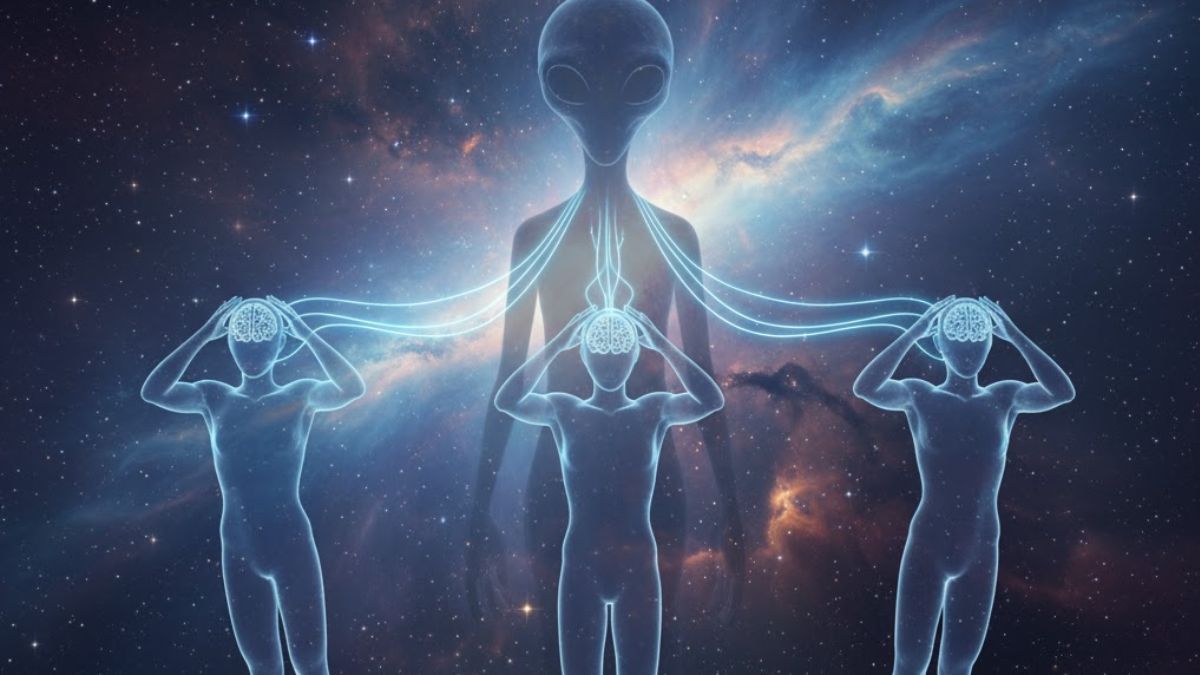
It’s a story that has been told for decades, around campfires, in late-night conversations, and across countless movies and TV shows. An ordinary person is in their bedroom, driving down a quiet road, or simply going about their evening. Then, something strange happens. A bright light appears. Time seems to stand still. The next thing they know, they’re back in their bed or their car, but something feels different. Hours are missing from their memory. Later, in dreams or through therapy, a story emerges—a story of being taken by non-human creatures, of being examined on a strange ship, of a profound and terrifying encounter.
These accounts of alien abductions are some of the most puzzling and fascinating stories of our time. For those who experience them, the memories are as real as any other. The feelings of fear, curiosity, and confusion are intense and lasting. Yet, there is no physical evidence, no spacecraft left behind, no definitive proof that these events happened in the way they are remembered. This leaves us with a big question, one that scientists, psychologists, and curious people have been trying to answer for years.
If these events aren’t literally true, why do so many people have such vivid, detailed, and similar memories of them? What is happening in the human mind to create these incredible stories? This article isn’t about proving whether aliens are real or not. Instead, we will explore the fascinating landscape of the human brain. We will look at the powerful and sometimes surprising ways our minds work during sleep, under stress, and when faced with the unknown. The answer to this mystery might not be found in the stars, but within ourselves.
So, what is it that can make an experience feel so real, even when it might not be?
What does a typical alien abduction story sound like?
If you listen to many people who recall being abducted, you’ll start to notice their stories share common pieces. It’s like different people telling a similar dream. While every story is unique to the person, a familiar pattern often emerges. This pattern is one of the reasons the phenomenon is so intriguing to researchers.
The experience often begins with a feeling of paralysis. The person might wake up in the night and find they cannot move their body. A strange presence is felt in the room. This is frequently followed by the appearance of mysterious figures, often described as being short and grey, with large, dark eyes. The person might then feel a sense of floating or being transported into a rounded, brightly lit room that feels like a medical lab. Here, they report being examined by these beings, sometimes with physical procedures. They might sense a communication, not through words, but through thoughts or images. Finally, they are returned, often to their bed, with little more than a hazy memory, a sense of lost time, and sometimes a lingering physical sensation. These memories often become clearer over days, weeks, or even years, feeling more real as time passes.
Could it be a very vivid dream?
One of the most common and straightforward explanations is that these experiences are incredibly lifelike dreams. Our brains are incredibly active when we sleep, creating whole worlds, stories, and sensations that can feel completely real. But some dreams are more intense than others.
Imagine waking up but your body is still asleep. This is a real and surprisingly common phenomenon called sleep paralysis. During a certain stage of sleep, your brain temporarily paralyzes your muscles, likely to prevent you from acting out your dreams and hurting yourself. Sometimes, you can wake up while your body is still in this “off” state. You’re conscious, you can look around, but you can’t move a muscle. This can be a terrifying experience on its own. Now, add a dreaming brain that is still partly active. Your mind, trying to make sense of why you feel trapped and scared, might project a dream-like hallucination into your real room. You might “see” a shadowy figure, a demon, or in our modern culture, a grey alien standing in the corner or sitting on your chest. This mix of waking reality and dream imagery feels absolutely real, and it perfectly matches the start of many abduction accounts.
What is the role of our own beliefs and culture?
The things we watch, read, and believe in shape how our mind interprets the world. A hundred years ago, people might have described a terrifying nighttime encounter as a visit from a ghost, a demon, or a fairy. Today, in our age of space exploration and science fiction, our minds often use a different set of characters to explain the unknown.
Think of your brain as a brilliant detective. When something strange happens, it immediately starts looking for clues to solve the mystery. It pulls these clues from your own memories and knowledge. If you have watched movies about aliens, read books about UFOs, or are simply curious about life in space, your brain’s “detective” has a file full of alien-related clues. So, when you experience something it can’t easily explain—like a strange light in the sky, a period of lost time, or a episode of sleep paralysis—your brain works quickly to fill in the blanks. It might sift through its files and decide that the idea of “aliens” is the best fit for the clues. This isn’t a conscious lie; it’s your mind’s natural way of creating a story that makes sense of a confusing and frightening event.
Can the brain create false memories?
This might be the most surprising part: our memories are not like video recordings, stored perfectly and played back exactly. They are more like stories we tell ourselves, and these stories can change every time we remember them. They can be influenced by things we are told, things we see, and even our own thoughts.
Psychologists have shown in labs that it is surprisingly easy to create a false memory. In experiments, researchers have been able to make adults vividly remember childhood events that never happened, like getting lost in a mall or spilling punch on a bride at a wedding. How? They simply have a trusted person, like a family member, suggest that it happened. The brain takes this suggestion and, over time, builds a detailed, sensory memory around it. The person can eventually “remember” the event clearly, describing the smells, the sounds, and the feelings, even though it is entirely made up. In the case of alien abductions, a person might go to a therapist or a support group to explore a hazy, unsettling memory. If the therapist asks leading questions like, “Did you feel a presence?” or “Did you see a bright light?”, the person’s brain can use these suggestions as building blocks, constructing a full and detailed abduction memory that feels 100% genuine to them.
Are there other scientific explanations?
Beyond dreams and memory, scientists have looked at other factors that could contribute to these experiences. Our brain is a complex organ, and sometimes its normal functions can create extraordinary perceptions.
One area of study is temporal lobe activity. The temporal lobe is a part of your brain that deals with emotions, memory, and visual/auditory processing. In some people, this part of the brain can be more sensitive. When this happens, even without a medical condition, a person might be more prone to having spiritual, mystical, or paranormal feelings. They might sense a presence, see visions, or hear voices when no one is there. This isn’t a sign of being “crazy”; it’s just a variation in how the brain works. For someone with a sensitive temporal lobe, a quiet, lonely night looking at the stars could easily tip into a feeling of connection or encounter with something otherworldly. Another factor can be the power of suggestion. If you are in a place where people are frequently reporting UFO sightings, or if you are with a friend who points out a strange light, your own mind becomes primed to interpret that light as a spacecraft, making the experience feel much more significant and real.
Why is it so hard to change someone’s mind?
If you were to tell someone that their vivid, life-changing memory of an alien abduction might be a dream or a trick of the mind, they would likely find it very hard to believe. And you can understand why. The memory feels real. The emotions attached to it—fear, awe, curiosity—are powerful and authentic.
This is because the feeling of reality in our memories comes from the same parts of the brain, whether the event actually happened or not. When you remember a real event, like your last birthday, your brain activates areas related to sight, sound, and emotion. When you remember a false but vivid event, it activates those very same areas. To your own brain, there is often little difference. The memory has become a part of that person’s life story. It has shaped how they see the world and themselves. Letting go of that would mean rethinking a fundamental part of their identity, which is an incredibly difficult thing for any person to do. The experience, regardless of its origin, is deeply real to them on an emotional and personal level.
Conclusion
The mystery of alien abduction memories is a powerful reminder of how incredible, and sometimes mysterious, our own minds can be. We may look to the sky for answers about these stories, but the most likely explanations are found in the complex workings of the human brain—in the twilight state between sleep and waking, in the brain’s need to create logical stories from confusing events, and in the fragile, creative nature of our own memories.
These experiences are not about who is right or wrong. They are about understanding the profound and very real power of the human imagination. For the people who have these memories, the encounter is a true and significant event in their lives. Science simply offers a different lens through which to view it, suggesting that the final frontier we are exploring may not be deep space, but the vast and uncharted universe within our own heads.
What do you think is more fascinating: the possibility of visitors from other worlds, or the incredible power of our own minds to create such vivid and believable stories?
FAQs – People Also Ask
1. What is the most common description of aliens in abduction stories?
Most often, people describe them as “Grey Aliens.” These beings are typically said to be about three to four feet tall with slender bodies, large hairless heads, and very large, dark, almond-shaped eyes. Their skin is usually described as grey in color.
2. Can sleep paralysis really make you see things?
Yes, absolutely. During sleep paralysis, your mind is partially dreaming while you are conscious. This can cause you to hallucinate, meaning you see, hear, or feel things that are not physically there. These hallucinations often involve a threatening presence in the room.
3. Have any famous people claimed to be abducted by aliens?
While not extremely common, some well-known individuals have shared their stories. For example, the American singer-songwriter John Lennon once suggested he had an unexplained experience that could have been an abduction, and Travis Walton’s claimed abduction was turned into the movie Fire in the Sky.
4. How many people believe they have been abducted by aliens?
It’s difficult to get a precise number, but surveys have suggested that a small but significant percentage of the population, perhaps around 1-2% in some studies, report experiences that they believe could be alien abductions. This translates to millions of people worldwide.
5. Why do abduction stories from different people sound so similar?
Researchers believe this is largely due to shared culture. Movies, books, and TV shows about aliens (like The X-Files) have created a common set of images and storylines. When someone’s brain tries to explain a strange event, it draws from this shared “cultural script.”
6. Is there any physical proof of alien abductions?
To date, there is no scientifically verified physical evidence, like an alien object or a biological sample, that proves an abduction has occurred. Claims of “implants” or unusual scars have been investigated, but they have always been explained by ordinary causes.
7. What should I do if I think I’ve had an abduction experience?
First, it’s important to know that you are not alone and many people have similar experiences. It can be helpful to talk to a doctor or a therapist to rule out medical or psychological causes, such as sleep disorders or stress, which can often explain the symptoms.
8. Can children have these experiences?
Yes, there are reports from adults who say their experiences started in childhood. However, it can be difficult to distinguish between a child’s vivid imagination, nightmares, and a claimed real event, making these cases particularly complex.
9. What is a “missing time” experience?
“Missing time” is a common report where a person realizes that a period of time, usually one to several hours, is completely unaccounted for in their memory. They cannot remember what they did or where they were. This can have many causes, from simple distraction to a type of seizure or a psychological episode.
10. Do psychologists take these claims seriously?
Yes, most psychologists and psychiatrists take the claims very seriously because the distress and the belief are very real for the person. They may not believe literal aliens are involved, but they focus on understanding the person’s experience and helping them cope with the feelings and memories in a healthy way.